How to Assess Preowned Watch Condition Before Buying
Admin · October 28, 2026
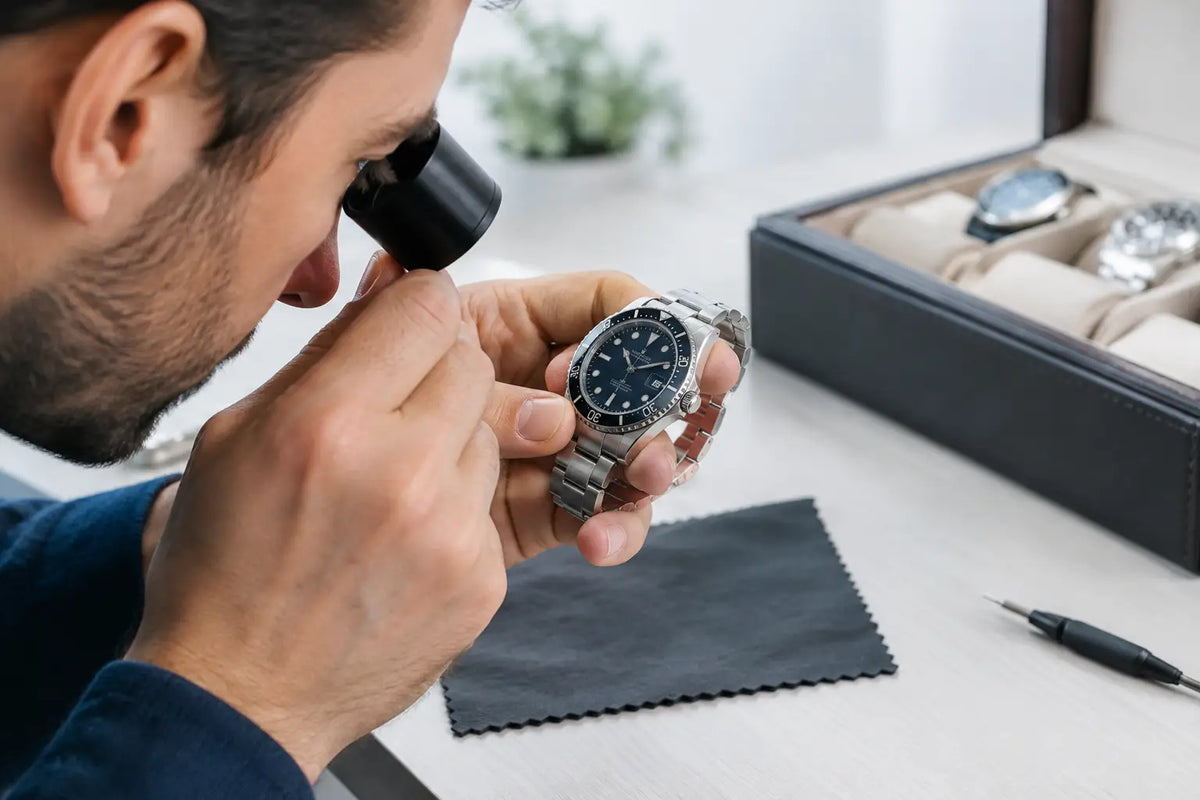
A desirable reference can look exceptional in a listing and still carry compromises that matter the moment it reaches your wrist. To assess preowned watch condition properly, look beyond the headline terms - “excellent,” “like new,” or “full set” - and examine the physical, mechanical, and historical details that determine both ownership satisfaction and collector value.
For a modern Rolex GMT-Master II, a crisp case and complete bracelet may be central to the decision. For a vintage Omega Speedmaster or early Patek Philippe, an untouched dial and correct components can outweigh light wear. Condition is not one universal standard. It is a reference-specific judgment, and the best purchase is one whose condition matches its price, rarity, and your purpose for owning it.
Start With the Case, Not the Shine
A watch case tells a story, but not every story is equally desirable. Honest wear from careful ownership is often preferable to an aggressively refinished case that has lost its original geometry. The latter can appear bright in photos while diminishing the character that collectors pay to preserve.
Examine the lugs first. On a Rolex Submariner, Daytona, or Explorer, they should retain balanced proportions and defined transitions. Soft, rounded lug edges may indicate repeated polishing. On an Audemars Piguet Royal Oak, the sharp architecture of the bezel and the contrast between brushed and polished surfaces are especially revealing. A blurred bezel edge or uneven brushing deserves closer scrutiny.
A professionally refinished watch is not automatically a poor buy. Many buyers prefer a clean, recently serviced presentation, particularly on contemporary daily-wear references. The trade-off is value: a highly polished example should not command the same premium as an equivalent watch with strong, original lines and only light signs of wear.
Look for deeper dents around the case flanks, crown guards, and lug tips. Fine hairlines are expected on a preowned luxury watch and are often less consequential than a single impact mark. Also inspect the caseback for tool marks, which can suggest careless service work or repeated unauthorized opening.
How to Assess Preowned Watch Condition Beyond the Case
The dial, hands, crystal, bracelet, and movement are not secondary details. Together, they establish whether the watch remains faithful to its original configuration and whether it is likely to deliver the ownership experience its pedigree promises.
Dial and Hands: Originality Has a Premium
The dial is often the soul of a collectible watch. On vintage and neo-vintage pieces, original lume, correct printing, even patina, and period-appropriate hands can make an extraordinary difference in desirability. A tropical dial, creamy tritium markers, or a matching handset may be more valuable than a cosmetically perfect replacement.
Study the dial under magnification where possible. Watch for uneven printing, damaged luminous material, moisture spotting, or evidence of refinishing. A redial is not always difficult to identify, but it can be difficult to value fairly without reference knowledge. Inconsistent fonts, misplaced minute tracks, and overly fresh-looking luminous material on an older watch are reasons to ask further questions.
For modern pieces, dial condition is usually more straightforward. Scratches, chips, or dust under the crystal remain relevant, but originality concerns tend to center on whether the dial, hands, bezel, and other visible parts belong to the reference. A replacement service dial may be entirely functional, yet it can affect value on discontinued or highly collected models.
Crystal, Bezel, and Crown: Small Parts, Major Signals
A sapphire crystal should be clean, free from chips, and properly seated. Minor surface marks can sometimes be resolved, while a chipped edge may call for replacement. On vintage acrylic crystals, light scratching is common and can be corrected, but cracks or severe crazing merit attention.
Check bezel action on dive watches and GMT references. A rotating bezel should turn with the expected feel, align properly, and show no excessive play. Ceramic bezels are highly scratch-resistant but can chip after a hard impact. Aluminum inserts may show fading and wear, which can be attractive and valuable on the right vintage reference.
The crown should screw down securely when applicable and operate smoothly. Resistance, grinding, or failure to engage may point to worn threads, a damaged crown tube, or a need for service. These are repairable issues, but they belong in the purchase calculation.
Bracelet Condition Often Separates Good From Great
Bracelets are expensive to replace and difficult to evaluate from a single front-facing photo. Confirm that the bracelet is correct for the watch, including its end links, clasp code where applicable, and number of removable links. A desirable watch on a mismatched bracelet is not equivalent to a complete original example.
Excessive stretch matters most on older folded-link and Jubilee-style bracelets, though any bracelet can develop looseness from long-term wear. Hold the bracelet at an angle and assess its sag, then inspect for dents, over-polishing, and clasp wear. On integrated-bracelet watches such as the Royal Oak or Nautilus, condition is particularly significant because the bracelet is fundamental to the design and costly to restore correctly.
Mechanical Health Is More Than “It Keeps Time”
A movement can run while still needing attention. Ask when the watch was last serviced, who performed the work, and whether documentation is available. A recent manufacturer or qualified specialist service can provide reassurance, but service alone does not make a watch more collectible. Replacement of original parts during service may affect originality, especially on vintage pieces.
For a modern mechanical watch, rate, amplitude, and beat error offer useful insight when measured on a timegrapher. These numbers should be interpreted in context. A watch’s age, movement design, and manufacturer specifications all matter. More importantly, the watch should wind, set, and change date correctly, with no unusual noise, rotor scraping, moisture evidence, or intermittent operation.
Water resistance is another area where assumptions can become costly. Unless a watch has been recently pressure-tested, do not treat a preowned dive watch as ready for swimming simply because it carries a 100-meter or 300-meter factory rating. Gaskets age, seals fail, and a luxury timepiece deserves caution around water.
Provenance, Completeness, and Price Must Agree
Box and papers do not change the physical condition of a watch, but they can materially change its market position. A complete set with the correct warranty card, booklets, serial matching details, hang tags, and service records is generally more desirable, particularly for Rolex, Patek Philippe, Audemars Piguet, and limited-production collector references.
That said, an incomplete watch is not automatically a poor choice. A no-box, no-papers example may offer compelling value if the watch itself is authentic, correctly configured, and priced accordingly. The key is to avoid paying full-set money for partial-set provenance.
Serial numbers, reference numbers, and production-correct details should align. On vintage watches, this process requires greater nuance because serial ranges, dial variants, bracelet codes, and service histories can be complicated. The rarer the piece, the more valuable expert authentication and condition review become.
A professional seller should be prepared to describe condition with specificity rather than broad reassurance. Ask whether the case has been polished, whether any components have been replaced, whether the watch has been pressure-tested, and whether the movement was inspected or serviced. Clear answers are part of the product.
Know Which Imperfections You Can Live With
The right condition standard depends on how you intend to wear the watch. If you want a daily-worn Tudor Black Bay or Omega Seamaster, a lightly polished case and a recent service may be entirely sensible. If you are acquiring a first-series Royal Oak, a rare Daytona dial variant, or a vintage Vacheron Constantin, originality and sharp preservation may deserve priority over cosmetic freshness.
Avoid chasing theoretical perfection at any price. A lightly worn, well-documented watch from a trusted source can be a stronger purchase than an allegedly flawless example with vague history. Conversely, do not let a prestigious name distract from poor proportions, questionable parts, or deferred mechanical work.
The finest preowned watches show their history with integrity. Buy the example that gives you confidence in the metal, the movement, and the story behind the reference - then wear it with the assurance that informed collecting provides.



Comments