Watch Resale Market Outlook for Serious Collectors
Admin · November 13, 2026
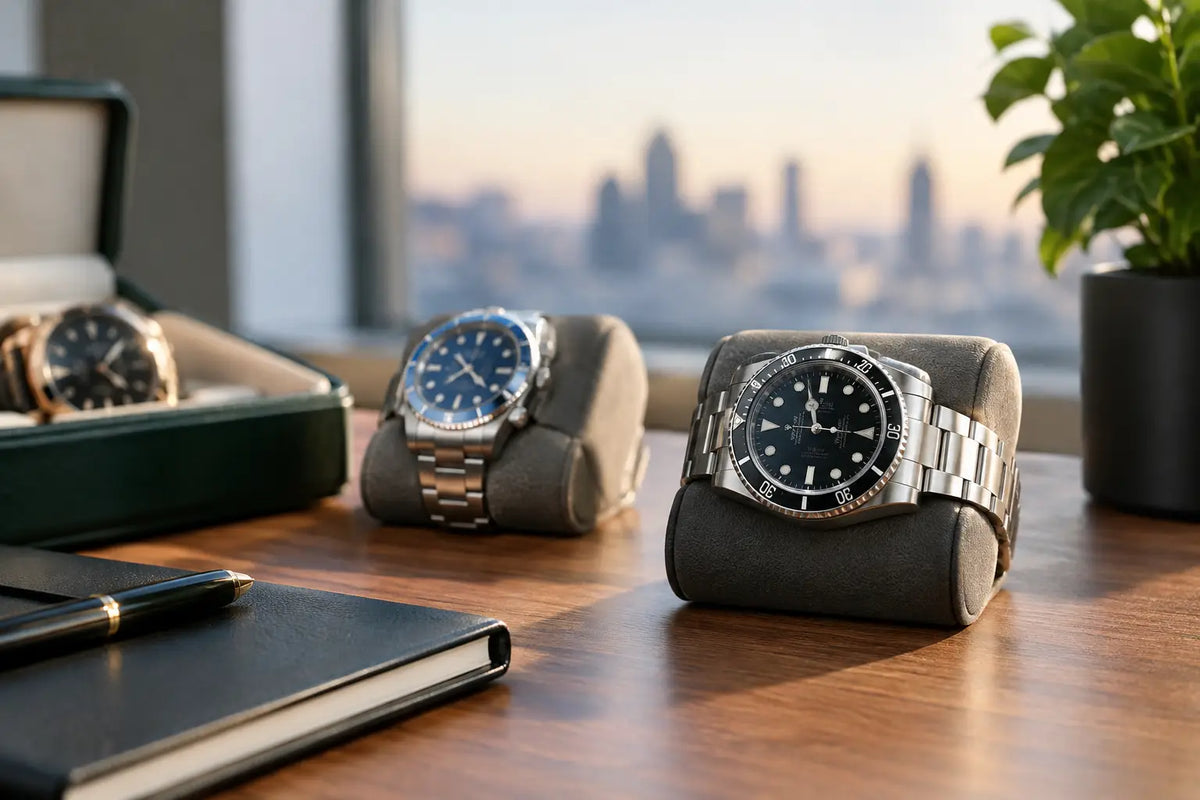
A steel sports watch can attract a queue of eager buyers one season and require careful pricing the next. That is not a contradiction in luxury horology. It is the nature of a market shaped by production, collector taste, condition, provenance, and the confidence buyers place in the seller. This watch resale market outlook is designed for collectors who see beyond short-term headlines and want to understand what actually supports value.
The secondary market has matured. Buyers have more pricing visibility, more choice, and a sharper eye for details than they did during the peak speculation of recent years. Yet the finest references from Rolex, Patek Philippe, Audemars Piguet, Vacheron Constantin, and other maisons of excellence remain highly desirable. The distinction now lies between genuine collector demand and momentum-driven demand.
Watch Resale Market Outlook: A More Selective Market
The defining characteristic of the current resale environment is selectivity. Broad enthusiasm for luxury watches has not disappeared, but buyers are less likely to treat every stainless-steel professional model as an automatic appreciation story. The market is rewarding watches with enduring design, limited availability, strong historical relevance, and a clear community of collectors behind them.
This favors iconography. A Rolex Daytona, GMT-Master II, or Submariner remains legible to collectors and first-time luxury buyers alike. The Audemars Piguet Royal Oak continues to command attention because its design language is unmistakable. Patek Philippe Nautilus and Aquanaut references retain powerful appeal, particularly where configuration, condition, and completeness meet a discerning buyer's standards.
At the same time, asking price and transaction price are not the same thing. A watch may be listed at an ambitious figure for months without establishing a new market level. For a serious buyer, that creates opportunity. For a seller, it reinforces the value of realistic pricing and a dealer with an active audience rather than relying on a speculative listing.
Why the Best References Continue to Hold Attention
Resale strength begins with desirability, not scarcity alone. A low-production watch without a durable collector base may be difficult to sell. Conversely, a reference made in meaningful volume can remain exceptionally liquid when it has decades of cultural relevance and a recognizable place in a brand's history.
Rolex remains a benchmark for liquidity because its most sought-after references combine worldwide recognition, practical wearability, and a deep pool of buyers. A current-production GMT-Master II or Daytona can be easier to understand and transact than a more obscure complication, even when the latter is technically rarer.
Patek Philippe operates on a different register. Its strongest resale performers are often supported by a blend of scarcity, finishing, heritage, and collector prestige. A carefully preserved Calatrava, perpetual calendar, or sports reference may appeal to a narrower audience than a Rolex, but that audience can be highly committed. The same is true of exceptional Vacheron Constantin pieces, where connoisseur appeal may matter more than mainstream visibility.
Omega, Tudor, Breitling, Zenith, and other respected Swiss manufacturers also deserve attention in a balanced collection. Their resale behavior can be less dramatic than the most hyped steel sports watches, but that may suit buyers who value design, heritage, and the pleasure of ownership over a rapid exit. A Speedmaster Professional with compelling provenance, for example, carries a kind of historic credibility that does not depend on passing trends.
Condition and Completeness Have Become Price Drivers
As the market becomes more knowledgeable, condition is separating exceptional examples from merely available ones. Original case geometry, crisp lug lines, unpolished surfaces where appropriate, correct dials and hands, and a bracelet with minimal stretch all influence value. These details are particularly consequential with vintage watches, but they matter for modern references as well.
Completeness also carries weight. A watch accompanied by its original box, papers, manuals, serialized accessories, and documented service history presents a more persuasive ownership story. Full sets are not always mandatory, especially for older pieces where surviving paperwork is naturally scarce. Still, when comparing two otherwise similar watches, the more complete example will usually appeal to more buyers.
There is a trade-off. Paying a premium for an immaculate, full-set example can make sense for a collector building a long-term position. For a buyer who simply wants to wear a beloved reference, a watch with honest wear and partial accessories may represent better value. The right choice depends on the role the watch will play in the collection.
The Return of Reference-Specific Buying
The broad category purchase is giving way to the reference-specific purchase. Rather than shopping vaguely for a "luxury sports watch," informed buyers are comparing bezel configurations, dial variants, production eras, bracelet types, and movement generations. They know why a discontinued reference may be more compelling than its replacement, or why a particular dial layout has developed a following.
That sophistication supports the market because it shifts attention from generalized hype toward the attributes that collectors can defend over time. A buyer pursuing a specific Rolex 126710BLRO, Royal Oak 15510ST, or Patek Philippe 5167A is typically motivated by more than a social-media price chart. They are responding to the design, the reference's place within the catalog, and its availability in the secondary market.
For sellers, reference specificity means presentation matters. Precise naming, clear photography, transparent condition disclosure, and accurate accessory details help qualified buyers act decisively. Luxury clients should not have to guess whether a watch is available, authenticated, or ready for insured shipment.
Authentication Is Part of Market Value
The resale market is only as strong as buyer confidence. Counterfeit components, altered dials, incomplete disclosures, and unclear service histories can turn an attractive purchase into an expensive concern. As values rise, the cost of uncertainty rises with them.
That is why authenticated inventory and professional review are not minor conveniences. They are central to the transaction. A trusted retailer should be able to stand behind the watch's authenticity, accurately describe its configuration and condition, and provide a buying process suitable for a high-value asset. Immediate availability and insured priority delivery also matter when a buyer has made a considered decision and expects the experience to match the caliber of the watch.
For newer collectors, this assurance can be the difference between entering the secondary market with confidence and taking an unnecessary risk through an informal channel. For established collectors, it protects time as much as money. The pursuit of a rare reference is demanding enough without having to resolve avoidable questions after purchase.
What Could Change the Outlook
No watch resale market outlook should imply a straight line upward. Luxury watches are discretionary purchases, and macroeconomic conditions affect buyer sentiment. Interest rates, equity-market performance, currency shifts, and consumer confidence can all influence the pace of transactions. A cooling market can reduce prices for speculative references while leaving truly scarce, important watches comparatively resilient.
Brand behavior matters, too. Changes in retail allocation, new releases, production adjustments, and anniversary editions can reshape demand quickly. A replacement model may elevate interest in a discontinued reference, or it may pull attention away from it. Collector taste is equally influential. Smaller cases, precious metals, neo-vintage design, and independent watchmaking can move from niche interests to major conversations with surprising speed.
The practical response is discipline. Buy the watch you would still be pleased to own if prices paused or softened. Favor strong condition, documented authenticity, and references with a clear reason to exist beyond scarcity. Avoid treating financing or resale projections as a substitute for a sound purchase decision.
How Collectors Can Buy Well in the Next Cycle
The next cycle will likely reward patience and conviction more than urgency. Focus first on the reference, then on the individual example. Compare condition closely, ask what accompanies the watch, and consider how easily the piece could be understood by the next qualified buyer if you later decide to sell.
For many collectors, the most compelling opportunities will not be the loudest ones. They may be a well-kept discontinued Rolex with its complete set, an underappreciated Zenith El Primero, a refined Vacheron Constantin dress watch, or an Omega with serious historical character. These purchases require taste, but they can offer a far more satisfying relationship with the market than chasing a sudden price spike.
Kingdom Watch Company approaches this moment with the priorities serious buyers expect: authenticated inventory, collector-led selection, and immediate access to the world's finest brands. When the reference is right and the example is right, confidence is not an accessory to the purchase. It is part of the watch's value.
The most enduring collections are built one considered decision at a time. Choose a watch with a story you want to wear, details you can defend, and quality that remains apparent long after the market has moved on to its next headline.



Comments