Luxury Watch Demand: What Drives the Market
Admin · November 01, 2026
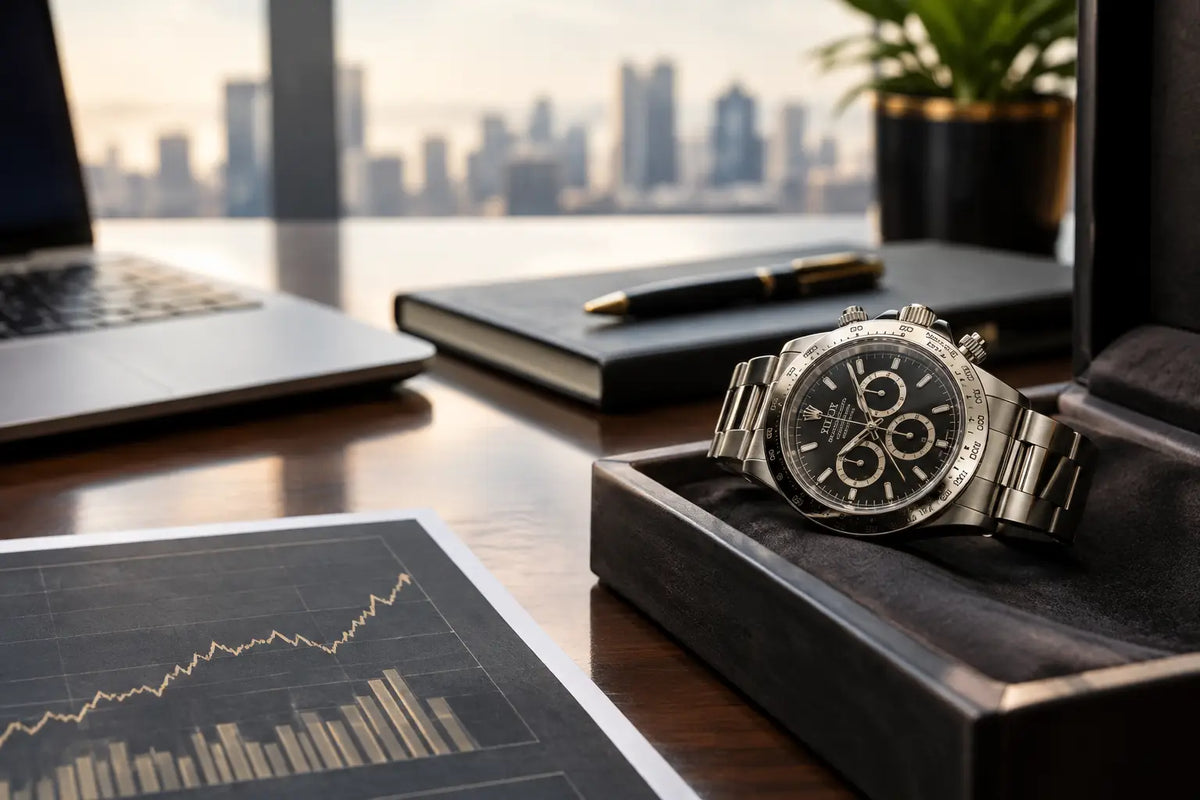
A stainless-steel Rolex GMT-Master II, a Patek Philippe Nautilus, and an Audemars Piguet Royal Oak may share a place in the modern collector’s conversation, but luxury watch demand does not treat them equally. Demand is shaped by far more than a recognizable name on the dial. Reference-specific scarcity, cultural relevance, condition, provenance, and the confidence a buyer has in the transaction all influence which watches move quickly and which remain available.
For collectors and first-time buyers alike, reading the market is less about chasing noise and more about understanding why certain timepieces retain attention across cycles. The most desirable watches combine enduring design with a story that remains convincing long after a trend has passed.
What Actually Drives Luxury Watch Demand?
The strongest demand tends to gather around watches that satisfy several motivations at once: personal enjoyment, visible achievement, mechanical substance, and resale confidence. A buyer may initially be drawn to the blue dial of a Royal Oak or the familiar profile of a Daytona. The decision to purchase, however, often comes down to whether the piece feels difficult to replace and easy to own with confidence.
Brand stature remains the starting point. Rolex, Patek Philippe, Audemars Piguet, Vacheron Constantin, Omega, and other established maisons benefit from decades, and in some cases centuries, of product history. Their strongest collections are instantly legible to enthusiasts and meaningful to buyers who simply appreciate exceptional objects. That recognition creates a broad audience when it is time to sell or trade.
Yet prestige alone is not enough. Within any major brand, demand can vary sharply between references. A Rolex Submariner has a different buyer profile from a precious-metal Day-Date. A Patek Philippe Calatrava may be admired for its restraint while a Nautilus attracts buyers looking for sport-watch pedigree and limited availability. Understanding the reference matters more than relying on the name alone.
Scarcity Is Powerful, but It Must Be Credible
True scarcity supports demand because it gives a watch a sense of occasion. Limited production, a discontinued reference, an unusual dial configuration, or a highly desirable bracelet can all narrow supply. But scarcity without a compelling design or collector following rarely creates lasting value.
The market has learned to distinguish between a watch that is genuinely hard to find and a watch that is merely difficult to sell. A low-production piece from a respected manufacturer can be compelling, especially when it has a distinct place in the brand’s history. Still, the best long-term performers usually have an established enthusiast base, not just a small production number.
This is why iconic models remain so resilient. The Daytona, Royal Oak, Nautilus, and GMT-Master II are not desirable solely because supply is constrained. They are desirable because each has built a durable identity through design, history, and repeated cultural relevance.
The Role of Design, Heritage, and Cultural Visibility
Certain watches have become visual shorthand for achievement. That status can be powerful, but the watches with the deepest appeal do more than signal success. They offer proportions, finishing, and engineering that reward close attention.
A Rolex Daytona balances a highly recognizable silhouette with the utility of a chronograph. The Audemars Piguet Royal Oak made an industrial, integrated-bracelet design feel like high horology. The Omega Speedmaster carries a connection to space exploration that remains immediately understandable. Each has a story that buyers can wear, discuss, and pass along.
Cultural visibility can accelerate interest, particularly when a watch appears on the wrist of athletes, artists, or business leaders. That attention is useful, but it can also create short-term price pressure around a narrow set of models. The more durable question is whether the watch would still be desirable without the momentary spotlight.
Collectors often find the best satisfaction in pieces that have both recognition and substance. A well-proportioned Zenith El Primero, a Tudor Black Bay with strong vintage cues, or a Vacheron Constantin Overseas can offer a more individual path than the most obvious choice. Demand may be broader for the headline references, but discernment can create opportunity beyond them.
Why Condition and Completeness Change the Equation
In the secondary market, no two examples are entirely alike. A reference number identifies the model, but condition determines much of the individual watch’s desirability. Sharp case lines, original finishing, a clean dial, correct components, and a properly functioning movement all affect buyer confidence.
Over-polishing is a frequent concern among experienced collectors. A polished watch is not automatically undesirable, especially if the work was careful and appropriate. However, aggressive refinishing can soften the case geometry that makes an original example compelling. On vintage watches, originality often carries even more weight. Hands, lume, bezel inserts, and bracelets can materially change both appeal and value.
Completeness matters as well. A watch accompanied by its original box, papers, warranty card, booklets, and service documentation presents a stronger ownership story. Not every collector requires a full set, and an exceptional watch without papers can still be an excellent purchase. But when comparable examples are available, completeness often separates the more sought-after piece from the merely acceptable one.
Availability Has Become Part of the Luxury Experience
Demand is not measured only by what buyers want. It is also reflected in what they can acquire without uncertainty. For many coveted references, boutique allocation and authorized dealer waitlists can make the retail path unpredictable. The secondary market exists in part because serious buyers value immediate access.
That access comes with a trade-off. Market pricing can sit above or below original retail depending on the model, production levels, and current buyer sentiment. A premium may be justified when it secures a specific configuration, a discontinued reference, or a watch available now from a trusted source. Conversely, patience can make sense when a buyer has flexibility on reference, dial, or timing.
The key is to assess the whole transaction rather than fixate on a single number. Authentication, condition disclosure, inventory availability, insured shipping, responsive service, and clear financing options all have real value when purchasing a high-ticket timepiece. A lower price is not always the better purchase if confidence is missing.
Demand Is Not the Same as Investment Certainty
Luxury watches can preserve value remarkably well, and select references have delivered exceptional appreciation over time. Still, no watch should be treated as a guaranteed financial instrument. Prices can rise quickly, cool sharply, or settle into a more rational range as supply and collector preferences shift.
Buyers who approach a watch exclusively as an investment may be disappointed by transaction costs, servicing needs, insurance, and the simple fact that markets are not always liquid at the desired price. The better approach is to buy a watch you would be pleased to keep. If it also has strong market support, that is a meaningful advantage.
This perspective leads to better decisions. A buyer who genuinely prefers the versatility of a Submariner over the visibility of a Daytona should not purchase the latter solely because it dominates conversation. The right watch is one that fits the wrist, the collection, and the owner’s reason for buying it.
How Buyers Can Read the Market With More Confidence
Start with a model family, then narrow the search to the exact reference, metal, dial, bracelet, and production era that appeal to you. Compare condition carefully rather than assuming all examples are interchangeable. Ask whether the watch comes with its original accessories, whether it has service history, and whether any components have been replaced or refinished.
It also helps to separate lasting demand from temporary excitement. Watches with a long record of collector interest, recognizable design language, and consistent global appeal tend to be easier to understand than pieces driven by a short-lived trend. That does not mean lesser-known references lack potential. It means they deserve more research and a more personal buying thesis.
For buyers who value both collector quality and immediate availability, Kingdom Watch Company offers authenticated inventory across the world’s finest brands, with the reassurance expected for a significant purchase. The goal is not simply to acquire a luxury watch. It is to acquire the right example, with the clarity to enjoy it from the first day on the wrist.
The market will continue to reward icons, rarity, and exceptional condition, but the most satisfying purchase remains personal. Choose the reference that you will notice every time you check the hour, then make sure its authenticity, condition, and provenance are equal to the occasion.



Comments