How to Choose Collector Watches With Confidence
Admin · November 21, 2026
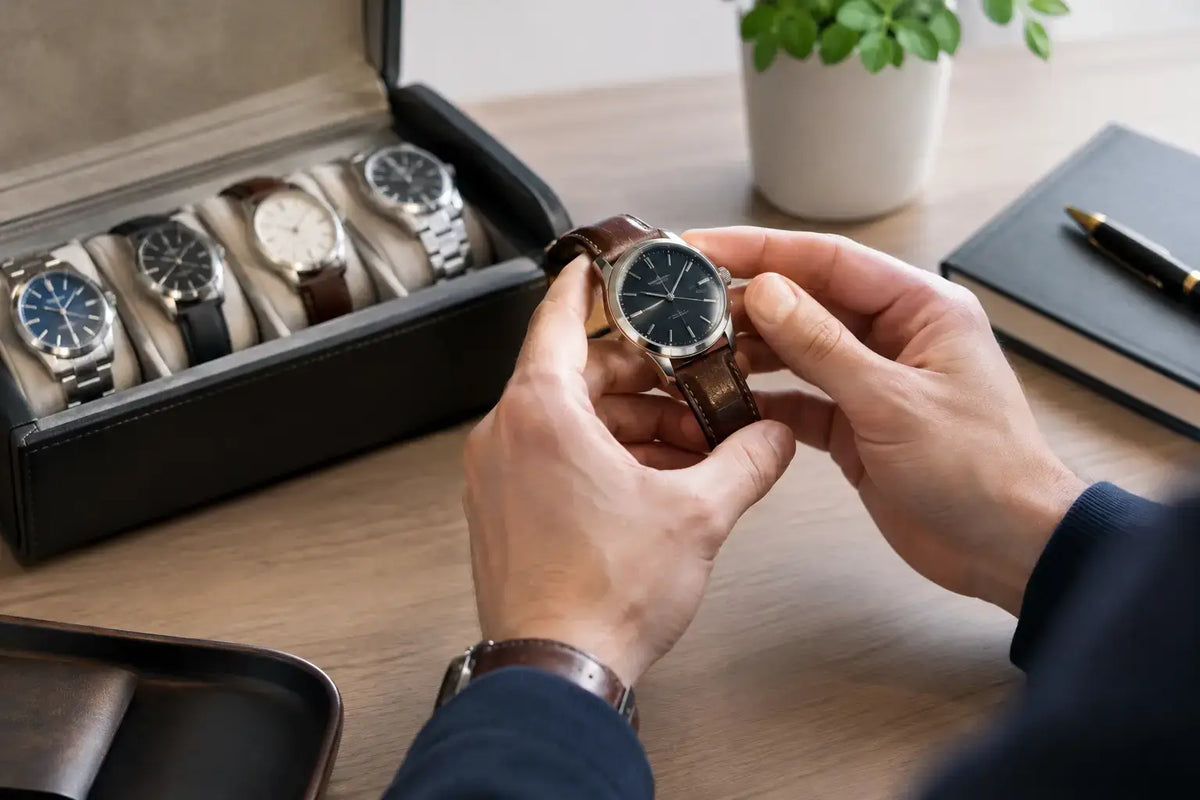
A collector watch is not simply a luxury purchase with a famous name on the dial. It is a specific reference, in a specific condition, with a story the market can verify. Knowing how to choose collector watches begins with separating lasting horological appeal from short-term excitement - then buying the best example your budget allows.
For some collectors, that means a Rolex GMT-Master II with the right bezel configuration and a complete set. For others, it is a Patek Philippe Calatrava that represents quiet technical refinement, or an Omega Speedmaster with period-correct details. The right choice depends on your collecting objective, but the standards for a serious acquisition remain remarkably consistent.
Start With a Collecting Thesis
The strongest collections have a point of view. Before comparing listings, decide what you want your watch to represent: a daily-wear icon, a historically important reference, a design milestone, a complicated dress watch, or a piece with long-term market strength.
Buying only what is currently difficult to find can lead to a collection of disconnected trophies. A more satisfying approach is to identify the brands, eras, and designs that genuinely hold your attention. Perhaps you are drawn to the architectural case of the Audemars Piguet Royal Oak, the travel utility of a Rolex GMT-Master II, or the restrained finishing of Vacheron Constantin. A clear thesis makes it easier to recognize value when the right watch becomes available.
It also helps establish a realistic budget. The cost of a collector-grade watch is not limited to the purchase price. Insurance, servicing, straps, secure storage, and potential sales costs all deserve consideration. For a first meaningful acquisition, it is often wiser to buy one excellent, well-documented example than several compromised watches.
How to Choose Collector Watches by Reference
Within every great maison, not every model carries equal collector significance. Reference matters because it identifies the precise configuration of a watch: its case dimensions, movement generation, dial layout, production period, bracelet, and sometimes even its original retail market.
Start by studying the reference rather than the broad model name. A Daytona, Seamaster, Royal Oak, or Nautilus may describe an entire family with decades of variations. The details that distinguish one reference from another can materially affect desirability and value. Case size, metal, dial color, movement, production volume, and whether a model has been discontinued all shape demand.
Collector appeal often sits at the intersection of design recognition and limited availability. The most sought-after watches tend to have an instantly legible identity, a meaningful place in a brand's history, and a supply that does not easily meet demand. That does not always mean the most expensive reference is the most intelligent choice. A less obvious Zenith El Primero, Tudor Black Bay, or Breitling Navitimer can offer exceptional heritage and mechanical interest at a different entry point.
Pay attention to why a reference is desired. Is it historically important? Was it produced for only a short period? Does it feature a movement collectors respect? Is the configuration especially clean, wearable, or difficult to source? A watch supported by several answers is usually more compelling than one driven by a single social-media trend.
Condition Is Part of the Watch
Condition is where many otherwise attractive purchases lose their advantage. Two watches with the same reference number can command dramatically different prices because originality and preservation matter.
A sharp case with defined edges is generally more desirable than one that has been aggressively polished. On vintage pieces, an untouched dial and matching luminous material may matter more than a cosmetically perfect appearance. On modern collector watches, look for clean bracelet stretch, correct clasp codes where applicable, even finishing, and no evidence of careless refinishing.
There is no universal rule that says a watch must remain entirely untouched. A properly serviced movement is a positive, particularly when the work is documented. A sympathetic polish performed by a skilled specialist may be acceptable for a watch intended to be worn. The trade-off is simple: the closer a piece is to its original factory specification, the stronger its appeal is likely to be among purist collectors.
Photographs should support the condition description, not replace it. Review the case profile, lug edges, dial surface, hands, bezel, bracelet, crystal, and movement when available. Ask whether any components have been replaced and whether the original parts accompany the watch. Transparency is a luxury in its own right.
Prioritize Provenance and Completeness
A complete set typically includes the watch, original box, papers or warranty card, booklets, tags, and any accessories supplied at the time of sale. Completeness can enhance resale confidence, especially for high-demand modern references. It also gives the next buyer a clearer record of what they are acquiring.
That said, provenance is more nuanced than simply having a box. A full set does not make a poor-condition watch collector-grade, and an exceptional vintage example without papers can still be highly desirable. For older watches, the correct dial, handset, bezel, case, and movement are often more meaningful than packaging that may have been separated from the watch decades ago.
Documentation becomes especially valuable when it tells a credible story. Service records, original sales documentation, known ownership, period photographs, and factory extracts can strengthen confidence. Be cautious of paperwork that appears disconnected from the watch or fails to align with its serial range, configuration, and age.
Buy for Wearability, Not Just the Display Case
The best collector watches invite ownership. Even a rare piece should feel right on the wrist if you intend to wear it. Consider diameter, thickness, lug-to-lug measurement, bracelet fit, water resistance, and how the watch suits your wardrobe and routine.
This is where market logic and personal preference occasionally diverge. A 36 mm dress watch may have stronger historical proportions than a larger contemporary alternative, yet a larger case may suit your wrist and lifestyle better. A precious-metal perpetual calendar can be extraordinary, but a steel sports watch may be the piece you reach for every week. Neither choice is wrong. The important question is whether you are buying a watch to admire, wear, preserve, or some combination of all three.
Frequent wear also introduces practical considerations. Vintage watches may not be suitable for swimming, impact-heavy activity, or magnetic environments. Modern pieces with durable movements and strong water resistance can offer more freedom, though they still deserve thoughtful care.
Understand Liquidity Without Treating Watches Like Stocks
Certain collector references retain value more consistently because demand is broad, supply is controlled, and the brand has enduring cultural weight. Rolex professional models, Patek Philippe sports references, Audemars Piguet Royal Oaks, and select Omega Speedmasters are often highly liquid, meaning there is an established audience when it is time to sell or trade.
Liquidity is not a guarantee of profit. Market prices can rise, stabilize, or decline, and a premium paid at the wrong moment can limit future upside. Rarity alone is not enough either. A watch can be scarce because few were made, or because few people want it. The more relevant measure is sustained collector demand for a particular reference and configuration.
Buy the watch you would be comfortable keeping if the market softened. That mindset naturally favors enduring design, condition, provenance, and personal conviction over speculation.
Make Authentication Non-Negotiable
In the secondary luxury market, confidence begins with authenticity. The risk is not limited to outright counterfeit watches. Incorrect bezels, service dials, replacement hands, refinished cases, swapped movements, and mismatched paperwork can all alter a watch's collector value.
A credible seller should be able to stand behind the watch, describe its condition accurately, and provide clear images of the actual piece. For significant purchases, independent authentication and careful inspection are not signs of distrust. They are signs of disciplined collecting.
Established dealers also offer a practical advantage: immediate access to curated inventory without the uncertainty of an informal transaction. Kingdom Watch Company approaches the acquisition process with the assurance serious buyers expect - authenticated timepieces, clear inventory presentation, and insured priority overnight delivery for qualifying purchases.
Let Patience Improve the Collection
The most satisfying collections are assembled deliberately. If the exact dial, metal, year, or full-set configuration is not available, waiting may be better than compromising on a watch that is merely close. This is particularly true for references where originality and presentation drive a meaningful portion of collector value.
A great watch should continue to reward your attention after the first week of ownership. Choose the reference whose details you will still notice years from now: the profile of the case, the rhythm of the movement, the history behind the dial, and the confidence of knowing you chose an example worthy of its name.



Comments