Best Swiss Watch Brands Explained for Collectors
Admin · November 11, 2026
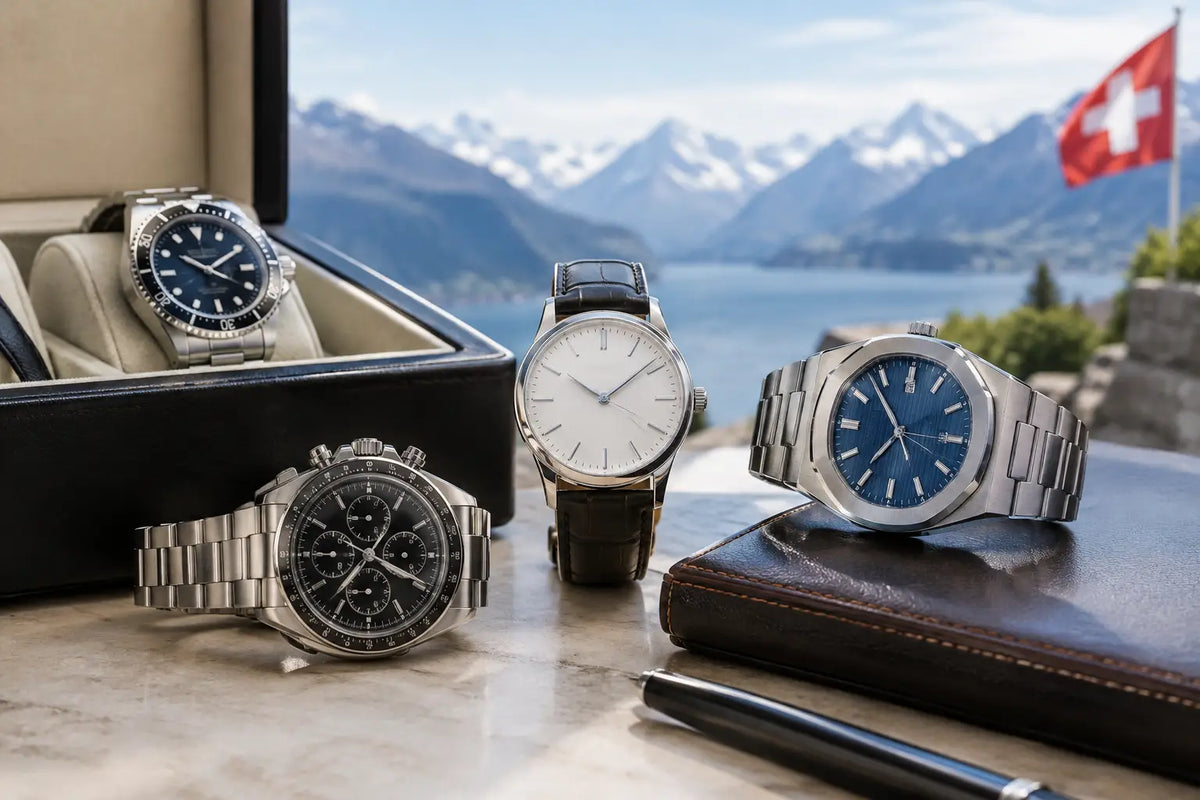
A steel sports watch with a famous name is not automatically the right Swiss watch. The best Swiss watch brands explained properly are not a simple ranking by price, recognition, or resale value. Each maison represents a distinct proposition: a particular design language, level of finishing, technical tradition, collector culture, and place in the market.
For a first serious purchase or the next addition to an established collection, the right choice comes down to what you want the watch to do. Some references are built for daily wear and global recognition. Others reward close inspection under a loupe, long-term connoisseurship, or a more personal sense of distinction.
What Defines the Best Swiss Watch Brands?
Switzerland's finest watchmakers do more than produce accurate mechanical instruments. They sustain design codes over decades, develop recognizable collections, and deliver a standard of casework, movement architecture, and finishing that makes the watch meaningful beyond its function.
That does not mean every outstanding Swiss brand occupies the same tier or serves the same buyer. Rolex may be the most universally recognized luxury sports-watch name, while Patek Philippe is frequently viewed as the benchmark for traditional high horology. Audemars Piguet changed the modern luxury market with the Royal Oak. Omega carries formidable technical credibility and cultural reach. Tudor offers a compelling entry into serious mechanical watch ownership without asking a buyer to compromise on identity.
The key is to assess a watch by its complete proposition: heritage, design, movement, condition, availability, and how confidently it fits your life or collection.
Rolex: The Global Standard for Luxury Sport Watches
Rolex is the reference point for many buyers entering the luxury watch market, and not without reason. The brand has built an unusually powerful combination of enduring design, practical engineering, and broad market recognition. A Submariner, GMT-Master II, Daytona, or Datejust is identifiable from across a room, yet each has a history grounded in real-world use.
The Submariner remains the archetypal dive watch. The GMT-Master II is a natural choice for travelers and collectors drawn to dual-time functionality. The Daytona occupies a special position as one of the most sought-after chronographs in the world, while the Datejust offers versatility that moves easily between business, travel, and formal settings.
Rolex is often a strong choice for buyers who value liquidity and everyday durability. Still, purchasing solely because a reference is popular can miss the point. Case size, dial configuration, metal choice, and generation matter greatly. A 36mm Datejust and a yellow-gold Daytona speak to very different tastes, even under the same crown.
Patek Philippe: The Collector's Expression of Heritage
Patek Philippe occupies rarefied territory. Its appeal lies in restraint, technical accomplishment, and continuity. Many collectors see the brand not as an accessory, but as a long-term expression of horological taste.
The Calatrava is the purest example of Patek Philippe's dress-watch philosophy: elegant proportions, refined dials, and an emphasis on timelessness rather than spectacle. The Nautilus, by contrast, transformed luxury sports watches with its distinctive porthole-inspired case and integrated bracelet. Its influence remains unmistakable across the contemporary market.
Patek Philippe is particularly compelling for collectors who appreciate movement finishing, thinner cases, complicated calendars, and the quiet authority of a watch that does not need to announce itself. The trade-off is that many of its most desirable references command significant premiums and deserve thoughtful attention to condition, completeness, and provenance.
Audemars Piguet: The Royal Oak and Modern Icon Status
Few watches have reshaped luxury watch design as decisively as the Audemars Piguet Royal Oak. Introduced in 1972, its octagonal bezel, exposed screws, integrated bracelet, and tapisserie dial made stainless steel feel as luxurious as precious metal when paired with exceptional finishing.
Today, the Royal Oak is a cornerstone of modern collecting. The 37mm and 41mm models appeal to different wrists and preferences, while chronograph, perpetual calendar, and precious-metal executions offer further depth for experienced enthusiasts. The bracelet finishing is central to the experience, with polished and brushed surfaces creating a play of light that photographs rarely capture fully.
Audemars Piguet suits the buyer who wants a design-forward statement piece with undeniable horological credentials. The Royal Oak is highly recognizable, which is part of its strength. For those seeking a less familiar route, the Code 11.59 collection provides a more contemporary and nuanced alternative within the maison's catalog.
Omega: Technical Legacy With Everyday Range
Omega combines significant heritage with impressive breadth. Its watches have been tested in ocean exploration, Olympic timekeeping, aviation, and space, giving the brand a technical narrative few competitors can match.
The Speedmaster Professional, known as the Moonwatch, is one of the most important chronographs ever made. Its manually wound movement, asymmetrical case, and NASA association give it an authenticity that reaches well beyond a famous story. The Seamaster family, including the Diver 300M and Planet Ocean, offers serious water resistance and a bolder, more contemporary presence.
For buyers looking for a genuine Swiss icon that can be worn frequently without the pressure surrounding some harder-to-source references, Omega is exceptionally persuasive. Co-Axial movements, strong anti-magnetism, and a wide selection of sizes and materials make it a practical brand to live with. Resale performance can vary by model, but value is not limited to market speculation.
Tudor: Purposeful Design and Exceptional Value
Tudor has established its own identity while benefiting from a close historical association with Rolex. The Black Bay collection leads the conversation, blending vintage-inspired proportions with modern manufacture movements and rugged utility.
A Black Bay Fifty-Eight is often an excellent first luxury watch for collectors who prefer compact dimensions and a classic dive-watch profile. The Pelagos offers a more technical tool-watch character, particularly in titanium, while the Black Bay Chrono gives buyers a sportier option with substantial wrist presence.
Tudor is not simply a substitute for Rolex. It appeals to buyers who want quality, strong design, and a lower barrier to entry, often with greater availability. Its value proposition is especially strong when the priority is wearing the watch rather than chasing a status signal.
Breitling and Zenith: Chronograph Specialists With Distinct Personalities
Breitling and Zenith both carry deep chronograph credentials, but they approach the category differently. Breitling is known for aviation heritage, bold proportions, and highly legible instrument-inspired designs. The Navitimer, with its slide-rule bezel, is an unmistakable classic for a buyer who wants a watch with visual character and pilot-watch history.
Zenith is revered by enthusiasts for the El Primero, one of the defining automatic chronograph movements. The Chronomaster Sport has earned attention as a sharp, modern chronograph with high-frequency engineering and a confident profile. Zenith tends to resonate with collectors who want technical substance and a more informed, less predictable choice.
Neither brand is universally right for every wrist. Breitling often makes a bolder statement, while Zenith can feel more movement-led and collector-focused. Trying case dimensions and bracelet styles is particularly worthwhile with both.
Vacheron Constantin: Understated High Horology
Vacheron Constantin is one of the oldest continuously operating watch manufactures and one of the great names of traditional Swiss haute horlogerie. Its strength is refinement without excessive theater. The finishing is exquisite, the design vocabulary is mature, and the watches reward sustained attention.
The Overseas is the brand's signature luxury sports watch, admired for its Maltese cross-inspired bezel and versatile interchangeable strap system. For collectors drawn to classical watchmaking, the Patrimony and Traditionnelle lines offer a more formal expression of Vacheron Constantin's craft.
This is a maison for buyers who understand that prestige need not be loud. It may not carry the instant recognition of Rolex or Royal Oak visibility of Audemars Piguet, but that discretion is precisely the appeal for many seasoned collectors.
How to Choose Between Swiss Watch Brands
Start with the model family, not only the brand name. A Rolex GMT-Master II, Patek Philippe Calatrava, Omega Speedmaster, and Vacheron Constantin Overseas can all be exceptional purchases, but they serve entirely different purposes. Consider whether the watch will be a daily companion, a travel piece, a formal watch, or a cornerstone collector reference.
Then consider the ownership experience. Bracelet comfort, case thickness, service expectations, and how the watch fits your wardrobe matter as much as movement specifications. Market demand also matters when resale strength is a priority, but no buyer should mistake short-term hype for lasting collecting value.
For pre-owned and collector-grade timepieces, authenticity and condition are non-negotiable. A complete set can be meaningful, particularly for sought-after references, yet the watch itself should always be assessed first: dial originality, case condition, bracelet stretch where relevant, service history, and correct configuration.
The finest Swiss watch is ultimately the one that continues to earn wrist time after the first excitement fades. Whether that means the enduring authority of a Rolex Submariner, the quiet finish of a Patek Philippe, or the technical romance of a Speedmaster, buy with clarity, buy authenticated, and choose the reference that feels worthy of keeping.



Comments